Career Opportunities in AI Robotics for B.Tech Graduates in India
On this page
A warehouse robot that steers around a moving forklift is running a camera, a map and a machine learning model at the same time. The engineers who built it came from computer science, electronics, electrical and mechanical branches, and many learned the robotics part after graduating. The career opportunities in AI robotics open to a B.Tech graduate in India follow the same pattern: several entry routes, each with its own demands.
What AI robotics actually means
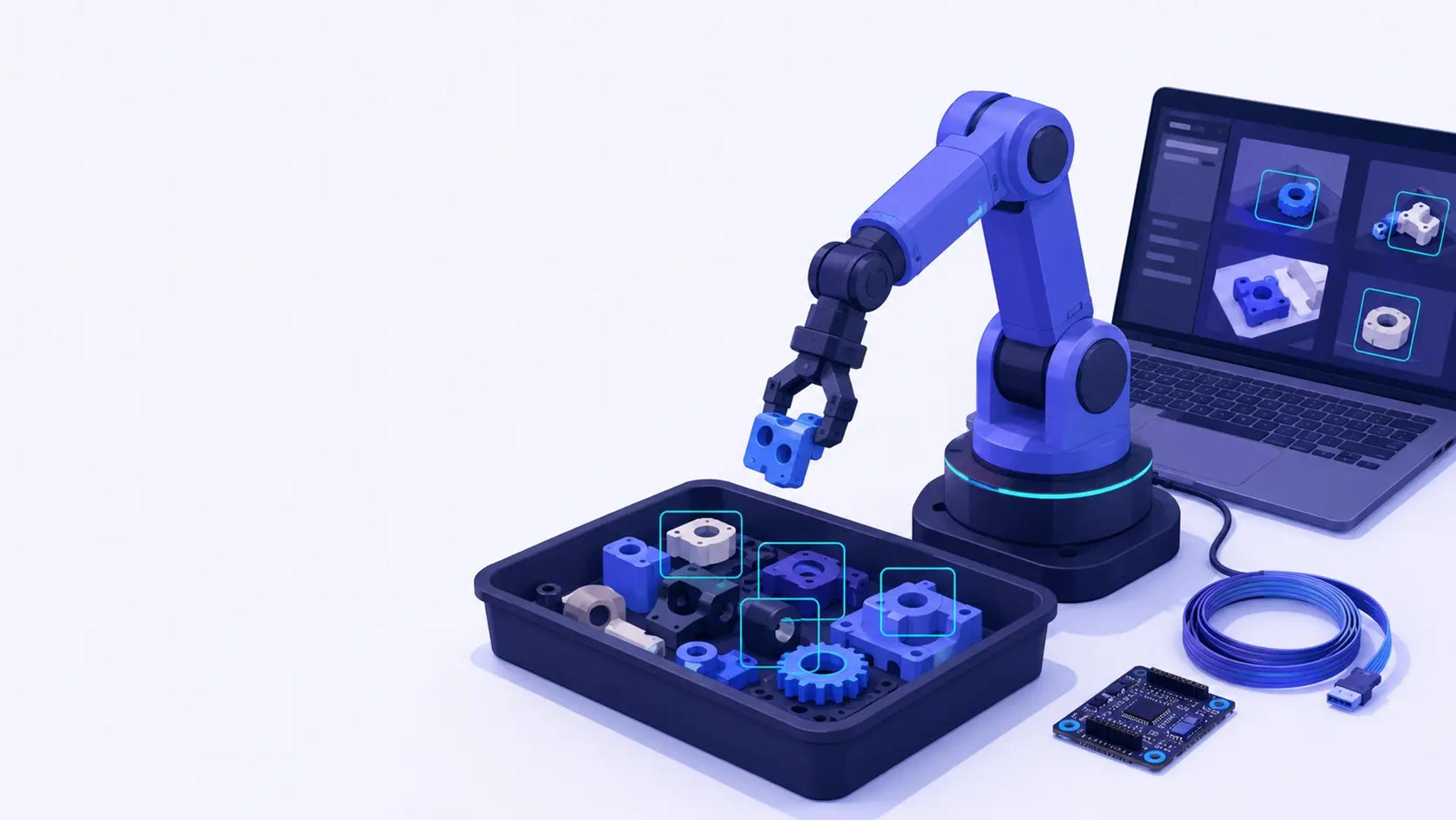
A traditional factory arm repeats one weld a million times. An AI-driven arm looks into a bin of mixed parts, works out which one to pick up and adjusts its grip when the part is slightly off. Perception, planning and learning sit on top of the mechanics and electronics.
It also explains why the field hires from so many branches. A robot needs software that interprets sensor data, firmware that drives motors, control theory that keeps its movement smooth, and a mechanical frame to carry everything. One graduate rarely covers all four, so robotics teams are put together from people with different training.
Career opportunities in AI robotics: roles worth aiming for
- Robotics software engineer. Writes the code that connects sensors, planners and motors, usually in C++ and Python on Linux with ROS 2. The most common starting point for computer science and IT graduates.
- Perception or computer vision engineer. Turns camera, depth and LiDAR data into something a robot can act on: where an object is, where the floor ends, who just walked past. Expect OpenCV, a deep learning framework like PyTorch and a lot of bad lighting.
- Machine learning engineer for robotics. Trains models for grasping, navigation or fault detection and fits them onto small edge devices. Reinforcement learning appears here, mostly in research-heavy teams.
- Embedded and firmware engineer. Writes low-level code on microcontrollers that reads sensors and drives motors. A natural fit for electronics and electrical graduates.
- Controls engineer. Tunes how a robot moves, using PID loops and trajectory tracking. Needs solid maths, and it’s a common route in for mechanical and instrumentation graduates.
- Automation and integration engineer. Commissions industrial arms, vision systems and PLCs on a real factory floor and keeps them running. The job is closer to plant engineering than to research.
- Simulation and test engineer. Builds virtual environments in tools like Gazebo so robot behaviour can be tested before it touches hardware.
- Drone and UAV engineer. Works on flight control, autonomy and payload software for aerial robots.
Where the robotics jobs in India are
Warehouses and logistics firms use mobile robots and picking arms. Manufacturers, especially in automotive and electronics, install vision-guided arms and inspection systems. Agriculture companies build monitoring drones and ground robots. Hospitals and medical device makers work on surgical and rehabilitation systems. Defence and space labs run autonomy programmes, and infrastructure inspection (tanks, pipes, power lines) is a growing use for crawlers and drones.
By city, Bengaluru has the largest cluster of robotics and AI startups, with Pune, Hyderabad and the Delhi NCR also hiring, mostly around manufacturing and defence. Kerala has a smaller scene of robotics startups and automation companies. If you’d like to stay close to home, it’s worth looking at what’s actually advertised in Kochi before you assume there’s nothing.
The market is smaller than general software hiring. There are fewer employers, many are young companies, and some research roles prefer an M.Tech or PhD. Salaries vary a lot by company, city and role, so check current job listings instead of trusting a single figure from a blog. Many hiring managers in this field look closely at what you have built.
Skills to build as a B.Tech student
Start with programming. Python is the quickest way to get moving, and C++ matters because much real-time robot code is written in it. If you want structure, our Python training is one place to start. Get comfortable with the Linux command line at the same time, since almost every robotics tool assumes it.
Next comes ROS 2, the open-source framework widely used to connect robot software. The official ROS 2 tutorials walk you from a first workspace to publishers, subscribers and actions in order. After that, pick up OpenCV and one deep learning library, and learn enough kinematics and control to understand why a robot overshoots a target.
On the hardware side, learn to read a sensor and drive a motor from a microcontroller. If that part is new to you, embedded software training is one way in.
How to get started in AI robotics after B.Tech
A six-month plan is enough to put real work in front of an employer.
- Months one and two: Python, C++ basics, Linux and Git. Finish with a small command-line project you can push to GitHub.
- Months three and four: ROS 2 and simulation. Build a simulated robot that navigates a room and avoids obstacles in Gazebo.
- Months five and six: add vision and hardware. Train a small object detector, then run it on a Raspberry Pi or Jetson board attached to a camera and a motor or servo.
Record a short video of each project working and write a page on what went wrong and how you fixed it. That write-up shows an employer how you think, which a list of course names does not. If you’d rather learn with mentors and a fixed schedule, the advanced certification in AI and robotics is one option, and our guide to IT courses after B.Tech helps you compare it with others.
Frequently asked questions
Do I need an M.Tech to work in AI robotics?
Not for most applied roles. Research labs and some R&D teams prefer an M.Tech or PhD. For product, integration and software roles, skills and projects often count for more than the degree.
Can a mechanical or electronics graduate move into AI robotics?
Yes. Mechanical graduates tend to fit controls, mechatronics and integration work. Electronics and electrical graduates fit embedded and perception roles. Both need to add programming, which is the common thread across the field.
How is AI robotics different from industrial automation?
Industrial automation runs fixed programs on predictable inputs. AI robotics lets the machine respond to what it sees. Plenty of jobs sit between the two, which is why automation experience is a useful base to build on.
Where to go from here
Pick one role from the list above and build one project that shows it working. A simulated robot navigating a room, or a camera that sorts objects on a small conveyor, is enough. Put it on GitHub with a video and a short write-up, then apply to ten companies that build the kind of robot you built the project for.
Master Data Science, Machine Learning & Generative AI
Learn from industry architects with hands-on capstone projects, real-world datasets, and official IIT certification.

Expertzlab Team
Senior Technical Architect with 25+ years of industry experience across enterprise architecture, AI, Big Data, and Full Stack development. Mentor and founder at Expertzlab.
Want the full curriculum & fee structure for Data Science with Generative AI?
Includes module-by-module breakdown, project capstones & placement roadmap.
Related Tech & Career Guides
 Career
Is a Indian Institute of Technology TIH Certificate Valid? Is It a Degree?
Find out what a TIH IIT certificate really is, when it counts as valid, why it is not a degree, and how to word it honestly on your resume.
 Career
MERN Stack vs Python Full Stack: Which Has More Jobs in Kerala?
Compare MERN stack vs Python full stack jobs in Kerala: where openings come from, which suits freshers, and how to check the market yourself. Read the guide.
 Data Science
Data Scientist vs Cloud Data Engineer: Which Role Fits You?
Data scientist vs cloud data engineer: see what each role does, the skills and tools involved, how pay compares, and which one fits you best in Kerala.
Have Any Questions? Talk to an Advisor
Our expert career advisors are available 6 days a week to help you choose the perfect certification program and guide your tech career journey.