Cloud Data Engineer Roadmap for Freshers in Kerala
On this page
- What does a cloud data engineer do?
- Which skills come first in a cloud data engineer roadmap?
- Start with SQL
- Add Python and Git
- Learn how data pipelines and warehouses work
- Pick one cloud platform
- Move on to PySpark, then MLOps and generative AI
- Which projects will show your data engineer skills?
- Which data engineering certification should you consider?
- How can you find your first data job in Kerala?
- Where does a structured course fit into this roadmap?
- Common questions from freshers
- Can a fresher become a cloud data engineer directly?
- Do you need a computer science degree?
- Which cloud platform should you learn first?
- Your next step
You open a junior data job post and find SQL, Python, Spark, Airflow and AWS in one list. It is hard to know where to begin when every tool sounds urgent. This cloud data engineer roadmap puts those names in a learning order. It is written for final-year students and recent graduates in Kerala who want a clear next step.
What does a cloud data engineer do?#
Think of the job as plumbing for data. A cloud data engineer builds the routes that carry data from its source to the people who use it. Picture a retail company with sales in one system, stock in another and website clicks somewhere else. Someone has to collect those records, clean them and store them where analysts can query them.
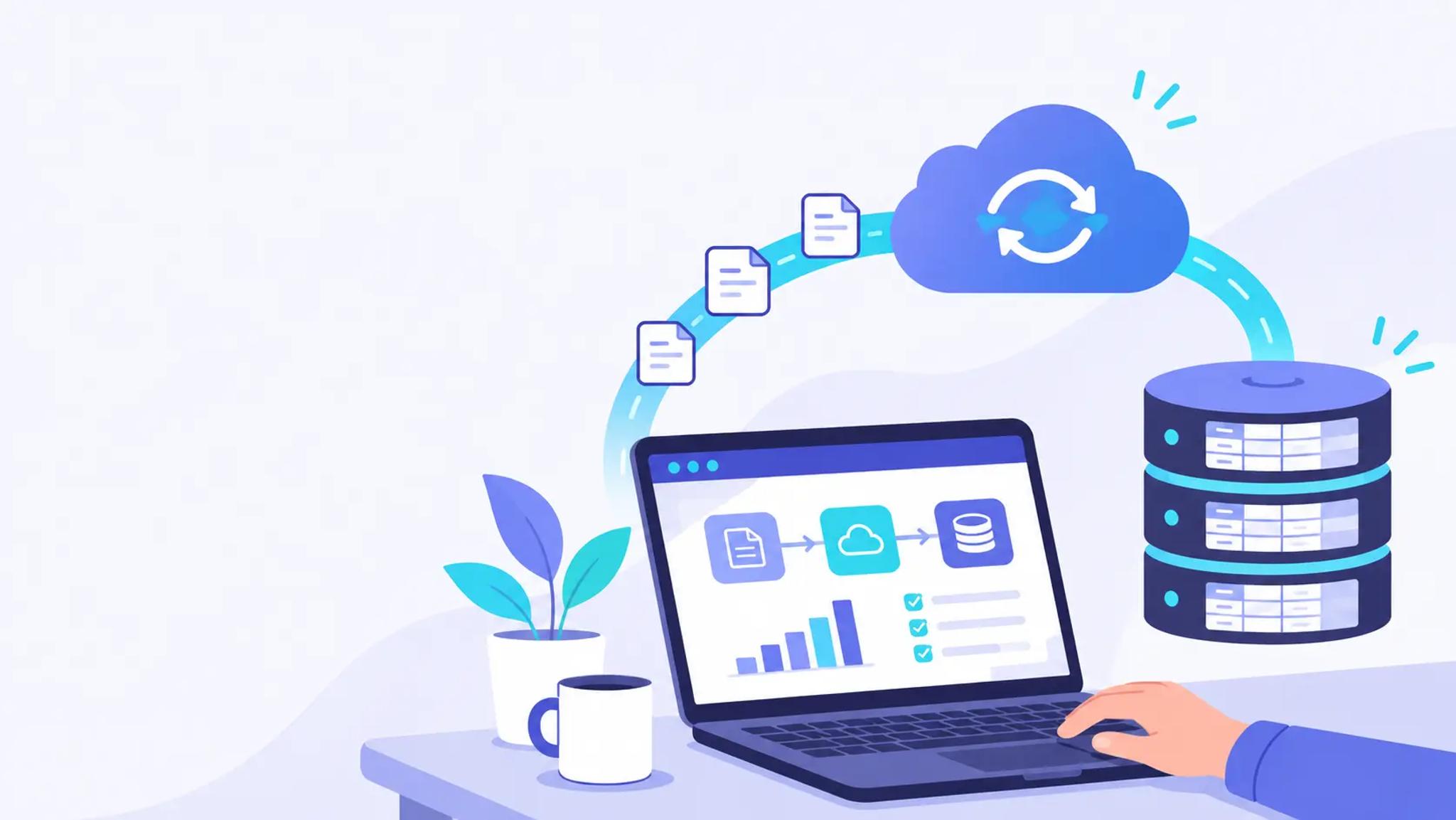
That work is called a data pipeline, which means a set of steps that moves and prepares data automatically. In a cloud role, the pipeline runs on rented services from providers such as AWS, Microsoft Azure or Google Cloud. Engineers also check that each run finished, the numbers are correct and the monthly bill is sensible. Analysts and data scientists depend on this work before they can build reports or models.
Which skills come first in a cloud data engineer roadmap?#
Foundations come before cloud platforms here. The order below is deliberate, because each stage gives you something to practise with when you reach the next one.
Start with SQL
SQL is the language used to ask questions of a database. Begin with filtering, sorting and grouping, then move to joins, which combine rows from related tables. After that, practise subqueries and window functions, which calculate across a group of rows without collapsing them.
PostgreSQL is free. Install it on your own laptop, load a small public dataset and answer the questions a shop owner or hospital manager might ask. Keep practising through every later stage, because pipeline work keeps bringing you back to queries.
Add Python and Git
Python helps you do what a query alone cannot, such as reading files, calling an API and handling errors. An API is a doorway that lets one program request data from another. You can skip advanced topics at first and concentrate on functions, lists, dictionaries, files and exceptions.
Git records the changes in your code, and GitHub gives you a place to share that code with anyone who asks. Get used to committing small changes often. A recruiter who opens your profile can then see how a project grew.
Learn how data pipelines and warehouses work
Reporting teams usually query a data warehouse, which is a database organised for analysis. Raw files often sit in a data lake, where storage is cheap and the data can wait until someone needs it. Once that difference is clear to you, study how fact tables (events such as sales) connect to dimension tables (details such as products).
The next pair of terms is ETL and ELT. Both involve extracting data, loading it somewhere and changing its shape, but they differ in whether the reshaping happens before or after loading. Test your pipeline with messy files on purpose. Duplicate rows, missing values and a job that fails halfway will teach you far more than a perfect sample file ever can.
Pick one cloud platform
One platform is enough for now. This guide uses AWS as the example, so that every service named below comes from the same provider. Start with Amazon S3 for file storage and IAM for controlling who can access what. Then try Glue for data jobs, Athena for querying files and Redshift for warehousing.
Set a billing alert before you create anything, since a forgotten service can keep charging you. Our AWS cloud computing training page is a useful next stop if cloud basics are new to you.
Move on to PySpark, then MLOps and generative AI
Apache Spark processes large datasets by splitting the work across several machines, and PySpark lets you use it with Python. Once your Python and SQL feel steady, rebuild an earlier pipeline in PySpark. Add Apache Airflow, a tool that schedules tasks and runs them in the right order.
MLOps is the practice of releasing machine learning models and watching how they behave afterwards. It makes more sense after you can deliver clean data on time. Generative AI tools can help you explain an error or draft a query, but you still need to check the result.
Which projects will show your data engineer skills?#
Two finished projects that you can explain will serve you better than a long list of tool names. The three ideas below grow out of one another, so try them in order.
- Daily sales pipeline. Load CSV files with Python, clean them and store the results in PostgreSQL. Write five SQL queries that answer business questions.
- Cloud version of the same pipeline. Place raw files in S3, process them with Glue or PySpark and query the output using Athena.
- Scheduled pipeline with checks. Run the job through Airflow, add data quality tests and record what happens when a step fails.
For each project, write a short README (the front page of a code repository). Describe the problem, draw the flow of data and list what broke along the way. Interviewers can ask about any line, so build only what you can defend.
Which data engineering certification should you consider?#
Treat a certificate as support for your project work. Exams and fees change, so check the official page before you pay.
The AWS data engineer certification is an associate-level credential covering pipelines, data models and data quality. AWS lists the fee as 150 USD with three years of validity, as checked on 28 November 2026. It also recommends about two to three years of data engineering or architecture experience. No formal prerequisite is listed, but a fresher should treat it as a stretch goal.
Microsoft's route is the Fabric Data Engineer Associate, earned by passing exam DP-700. Microsoft rates it as an intermediate credential. It expires unless you renew it through a free online assessment. You may still see older guides recommending DP-203, which Microsoft has retired.
How can you find your first data job in Kerala?#
Search for more than one job title. Openings for data analyst, SQL developer, ETL developer or data intern can put you close to pipeline work. Read each description and note which skills keep appearing.
Infopark's website has a jobs section where companies post openings, including some data roles. Check the experience requirement before applying, since some engineering posts ask for years of prior work. Our guide on getting an IT job without experience covers the wider fresher search.
Keep your resume to one page. Link each project on it to the matching GitHub repository, so a recruiter can open your code in one click. For more on the wider field, read about cloud computing jobs in Kerala.
Where does a structured course fit into this roadmap?#
Self-study works for people who can plan their week and solve errors alone. A course helps when you want a fixed sequence, feedback on your code and a deadline for each project.
Expertzlab offers the Advanced Certification in Cloud Data Engineering with MLOps & Generative AI, listed as TIH IIT Patna Certified. Our listing shows a six-month duration, PySpark and AWS Cloud, and new batches every month. You can review this cloud data engineering course in Kochi and ask for the current syllabus.
[FLAG: Writer input needed] Intent: say who can join and what learners build during the course Problem: eligibility, module list and course projects were not supplied What would help: entry requirements (including non-computer-science degrees), modules and two project examples
This path may not suit you if charts and business questions interest you far more than building systems. In that case, explore data analytics before committing to engineering.
Common questions from freshers#
Can a fresher become a cloud data engineer directly?
It can happen, but do not wait for that exact title. Apply for related data roles too, and use them to build experience with working pipelines.
Do you need a computer science degree?
There is no single rule. Each employer sets its own requirement, so read every job posting carefully before you rule yourself in or out. Whatever your degree, you will need working SQL, Python and projects you can explain.
Which cloud platform should you learn first?
AWS is a sensible starting point, and it is the example used above. If the jobs you want ask for Azure or Google Cloud, choose that one instead. Ideas such as storage, permissions and scheduled jobs carry across providers.
Your next step#
Start with something small this week. Open a database, pick a dataset you find interesting and write ten queries that answer questions you care about. Save them in a GitHub repository, even if they look simple. That folder is the first piece of work you can show, and every later stage can build on it.
Elevate from a Coder to a Disciplined Software Engineer
Gain real-world engineering skills: clean code, design patterns, automated testing, and software architecture.

Expertzlab Team
Senior Technical Architect with 10+ years of industry experience across enterprise architecture, AI, Big Data, and Full Stack development. Mentor and founder at Expertzlab.
Want the full curriculum & fee structure for Software & Enterprise Architecture?
Includes module-by-module breakdown, project capstones & placement roadmap.
Related Tech & Career Guides
 Career
What to Do After BSc Computer Science (IT Career Roadmap for Kerala Graduates)
Not sure what to do after BSc Computer Science? Get an IT career roadmap for Kerala graduates: job market facts, tracks, study options and honest FAQs.
 Career
Best Job-Oriented IT Courses After BCA in Kerala: 2027 Career Guide
Which IT course should you take after BCA in Kerala? Compare data analytics, full stack, cloud data engineering and AI using October 2026 hiring data.
 Engineering
Is Full Stack Development a Good Career in 2027?
Is full stack development a good career in 2027? An honest look at Kerala jobs, beginner salaries, AI, the skills to learn and who should skip it. Read on.
Have Any Questions? Talk to an Advisor
Our expert career advisors are available 6 days a week to help you choose the perfect certification program and guide your tech career journey.